
Call : +302286024305
Email : info@hotel-santorini.gr
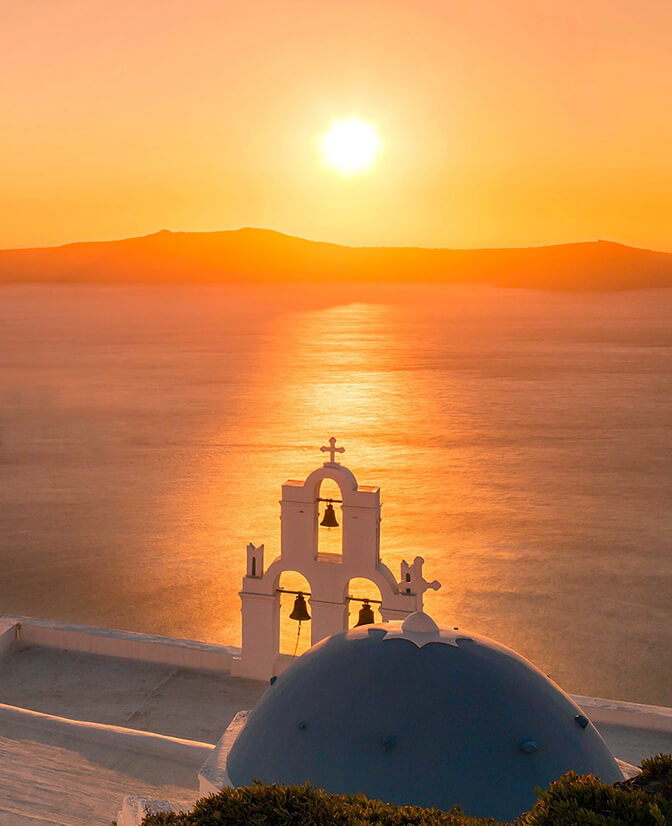
Santorini is world-renowned for its mesmerizing sunsets, especially in the village of Oia, where the sky bursts into vivid shades of orange, pink, and gold as the sun dips into the Aegean Sea. Watching the sunset from the caldera cliffs, a rooftop bar, or a luxury terrace is a must-do experience and one of the most romantic moments you can enjoy on the island.
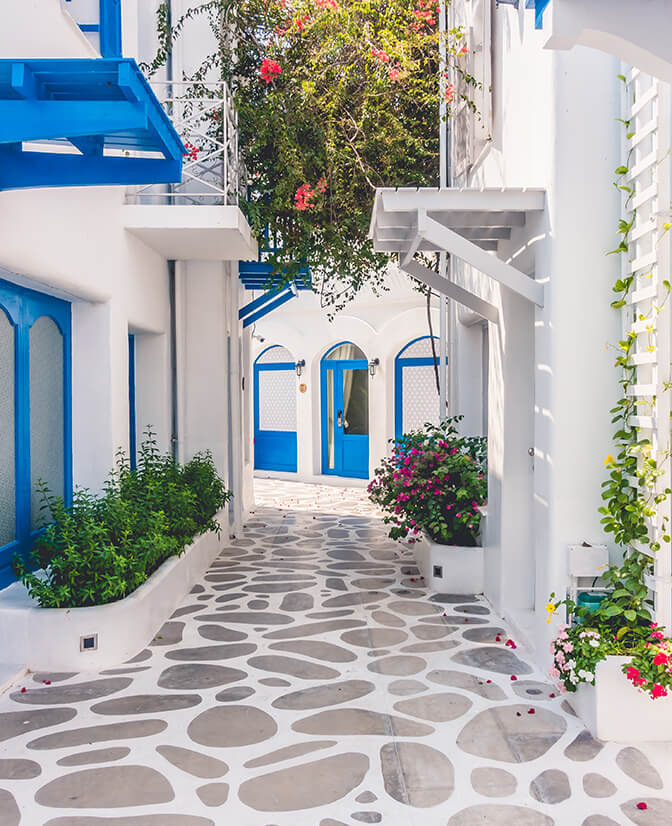
Discover the authentic beauty of Santorini on foot with a guided walking tour through its picturesque villages and volcanic landscapes. Stroll through the narrow alleys of Fira, Imerovigli, and Oia, admire traditional Cycladic architecture, and uncover hidden chapels, panoramic viewpoints, and stories that only locals know. It’s a perfect way to connect with the island’s culture and charm.
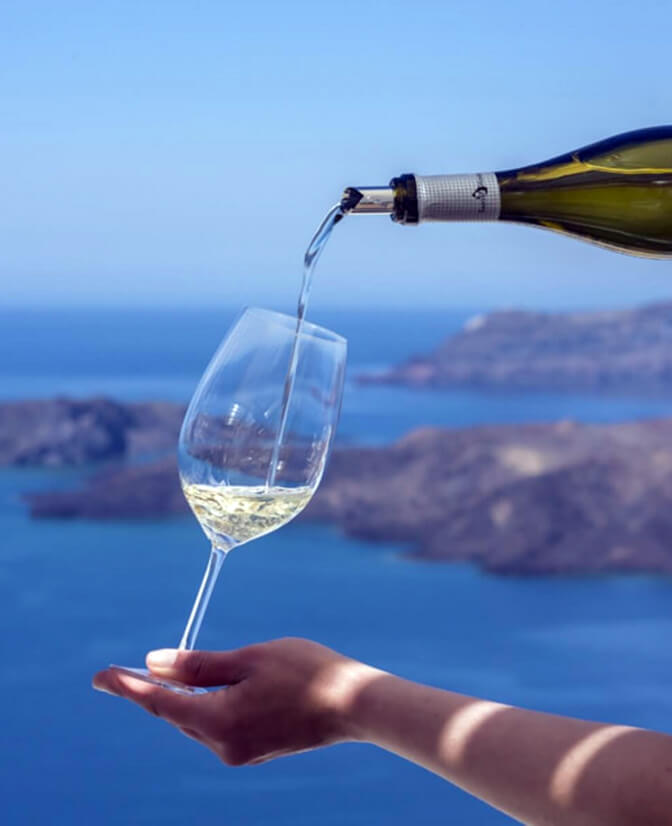
Santorini is one of the oldest wine-producing regions in the world, famous for its volcanic soil and unique grape varieties like Assyrtiko. Wine tasting tours take you through traditional wineries and modern estates, where you can savor award-winning white wines, sweet Vinsanto, and local delicacies. It’s a sensory journey through centuries of viticulture in one of Greece’s most distinctive terroirs.
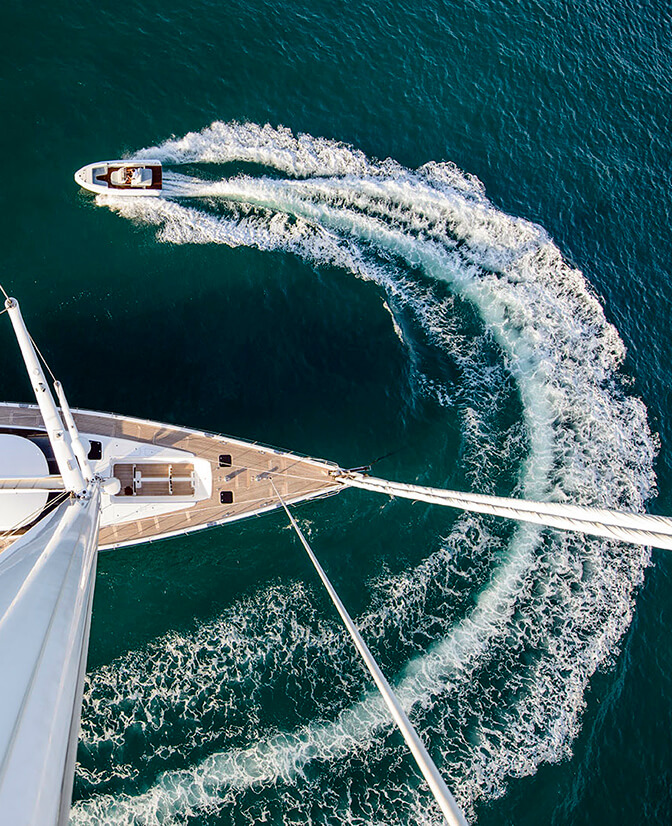
A sailing cruise around Santorini offers a different perspective of the island’s dramatic beauty. Glide past towering cliffs, red and white beaches, and volcanic formations. Stop to swim in crystal-clear waters, soak in hot springs, and enjoy a sunset dinner on board. Whether on a catamaran, yacht, or traditional boat, it’s one of the most memorable ways to experience Santorini.
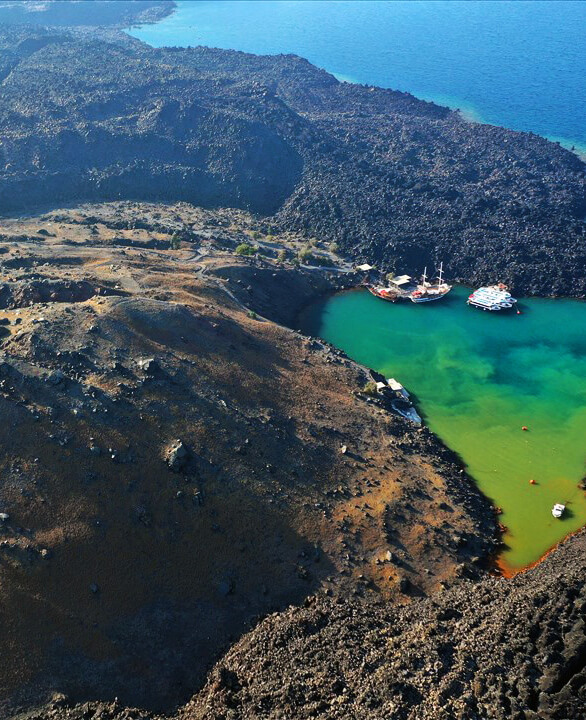
Just a short boat ride from Santorini, the volcanic islet of Nea Kameni invites you to hike on an active volcano and witness its craters up close. The path leads you through a surreal, lunar-like landscape, revealing the island’s explosive geological past. Combined with a visit to the nearby thermal springs, it’s an exciting and educational excursion ideal for nature lovers.
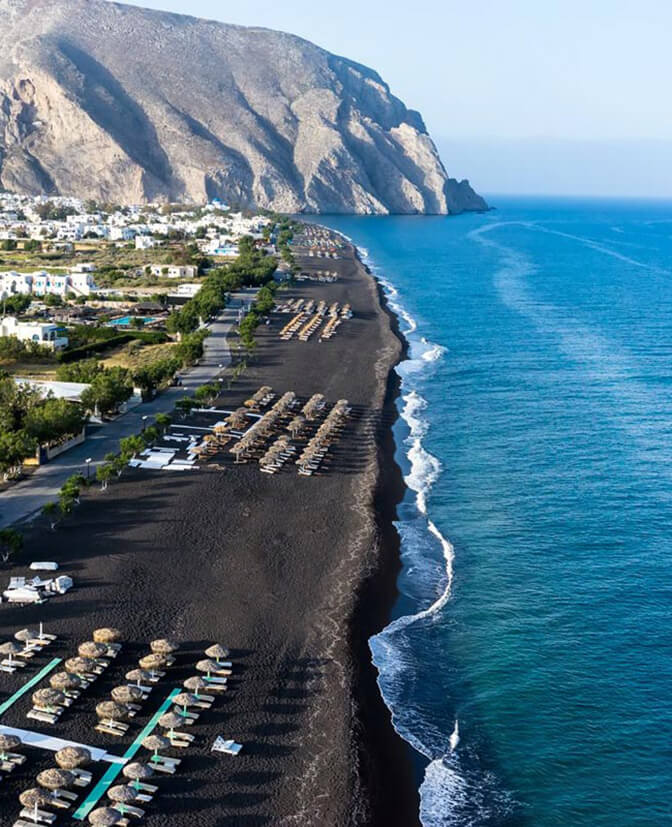
Santorini’s volcanic origins created some of the most unique beaches in Greece. The famous Black Beach in Perissa and Kamari features striking black sand and deep blue waters, perfect for swimming, sunbathing, or enjoying seaside tavernas. The dramatic scenery and warm sea make this beach experience unlike any other in the Mediterranean.
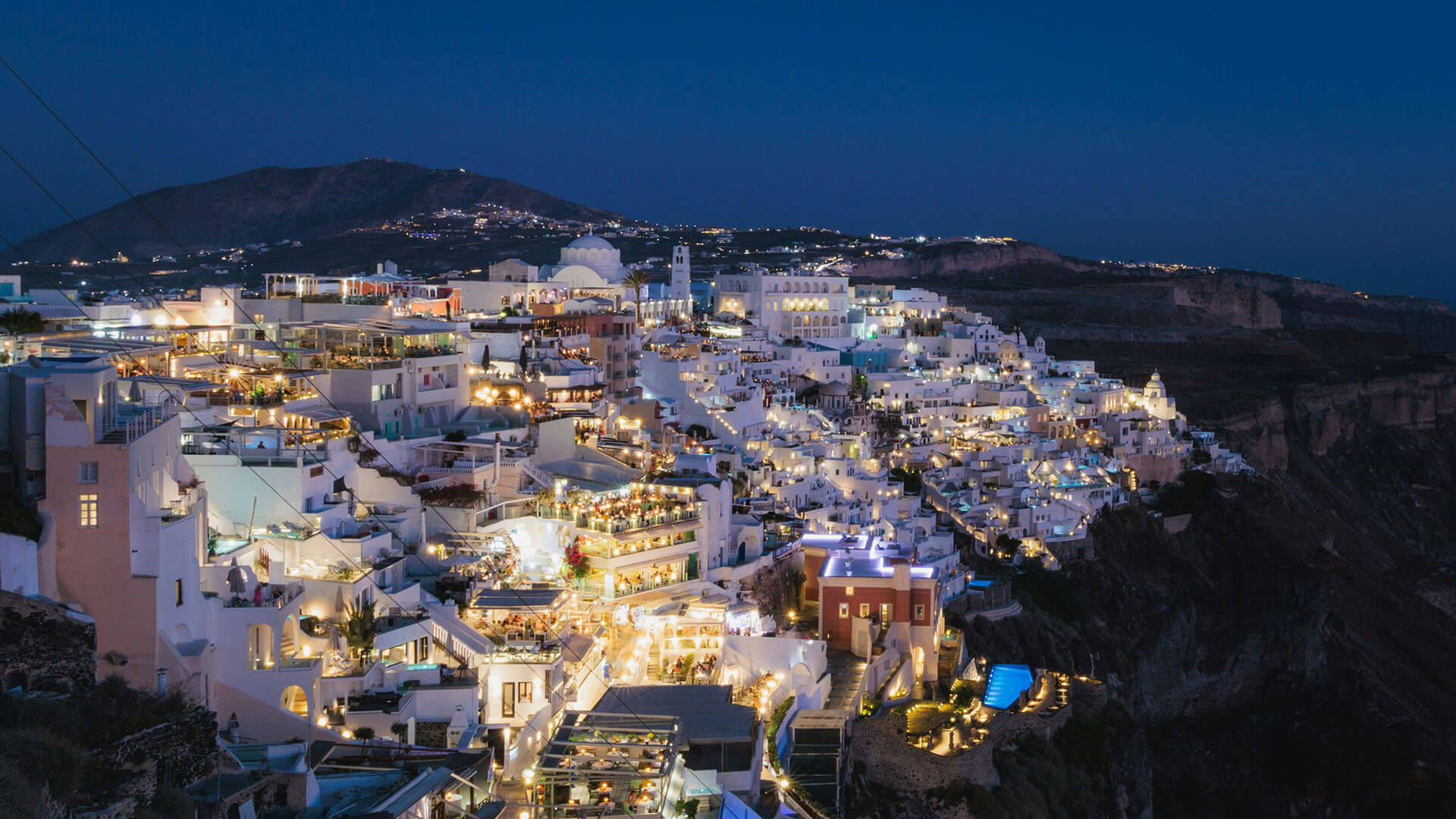
Is the picturesque capital of the island, and it looks like a marvelous painting, perched high up on the edge of the Caldera. Firá, together with Oia, Imerovígli and Firostefáni are located high above on a Cliff, and they are called “Caldera’s eyebrow”. Other famous smaller villages are Akrotíri and Méssa Vounó, with their famous archaeological sites, Pýrgos, Karterádes, Emporió, Ammoúdi, Finikiá, Períssa, Perívolos, Megalohóri, Kamári, Messariá and Monólithos: some of the villages are cosmopolitan, some more peaceful; they are surrounded by vast vineyards, whitewashed cliff-top towns with castles with amazing views of the Aegean.
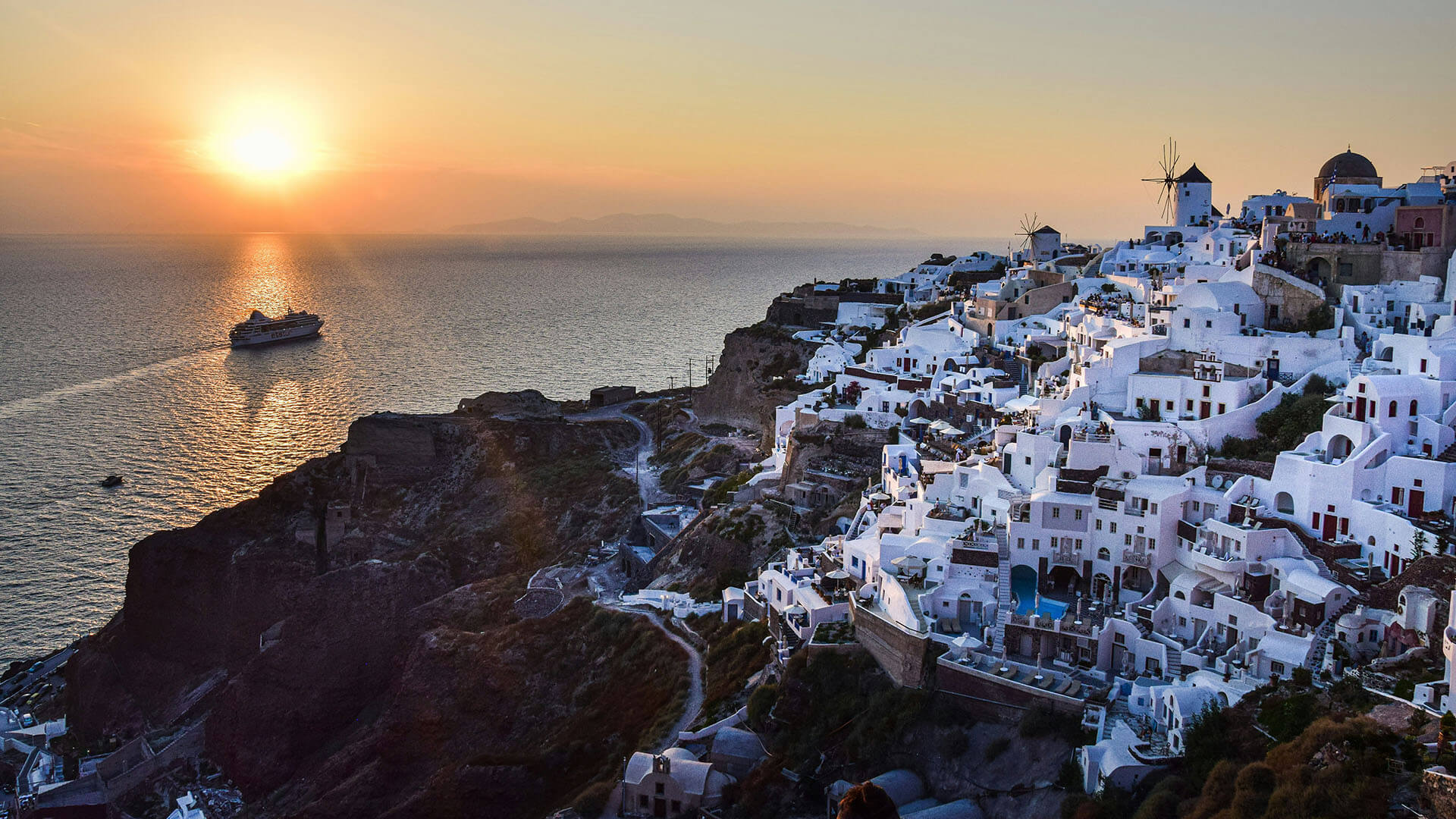
Oia is world famous for its spectacular sunsets. The island has a growing reputation as a “wedding destination” for couples - not only from Greece but from all over the world. A trip to Santorini with your other half is a dream for anyone who has seen at least one photo of the island’s famous Caldera and exchanging kisses beneath Santorini’s famous sunset is the ultimate romantic experience!
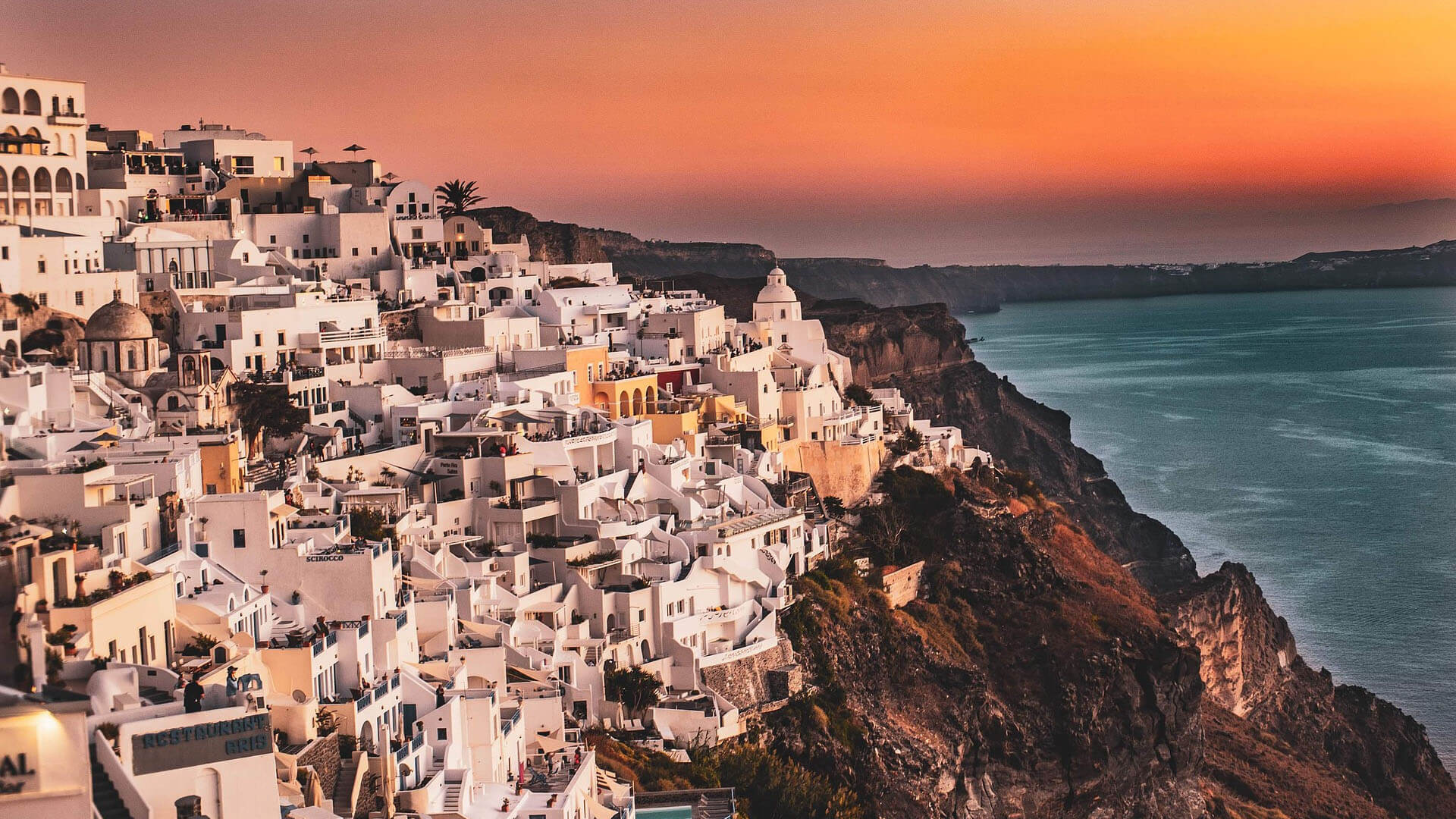
Is a large cauldron-like hollow that forms shortly after the emptying of a magma chamber in a volcanic eruption. Santorini’s half-moon-shaped bay is the center of the caldera, which collapsed after a volcanic eruption during the Minoan civilization, eventually leading to their decline, just like Pompeii. Indeed, the eruption was so massive that it seems to have caused significant climate perturbations; it was possibly one of the biggest volcanic eruptions on Earth.
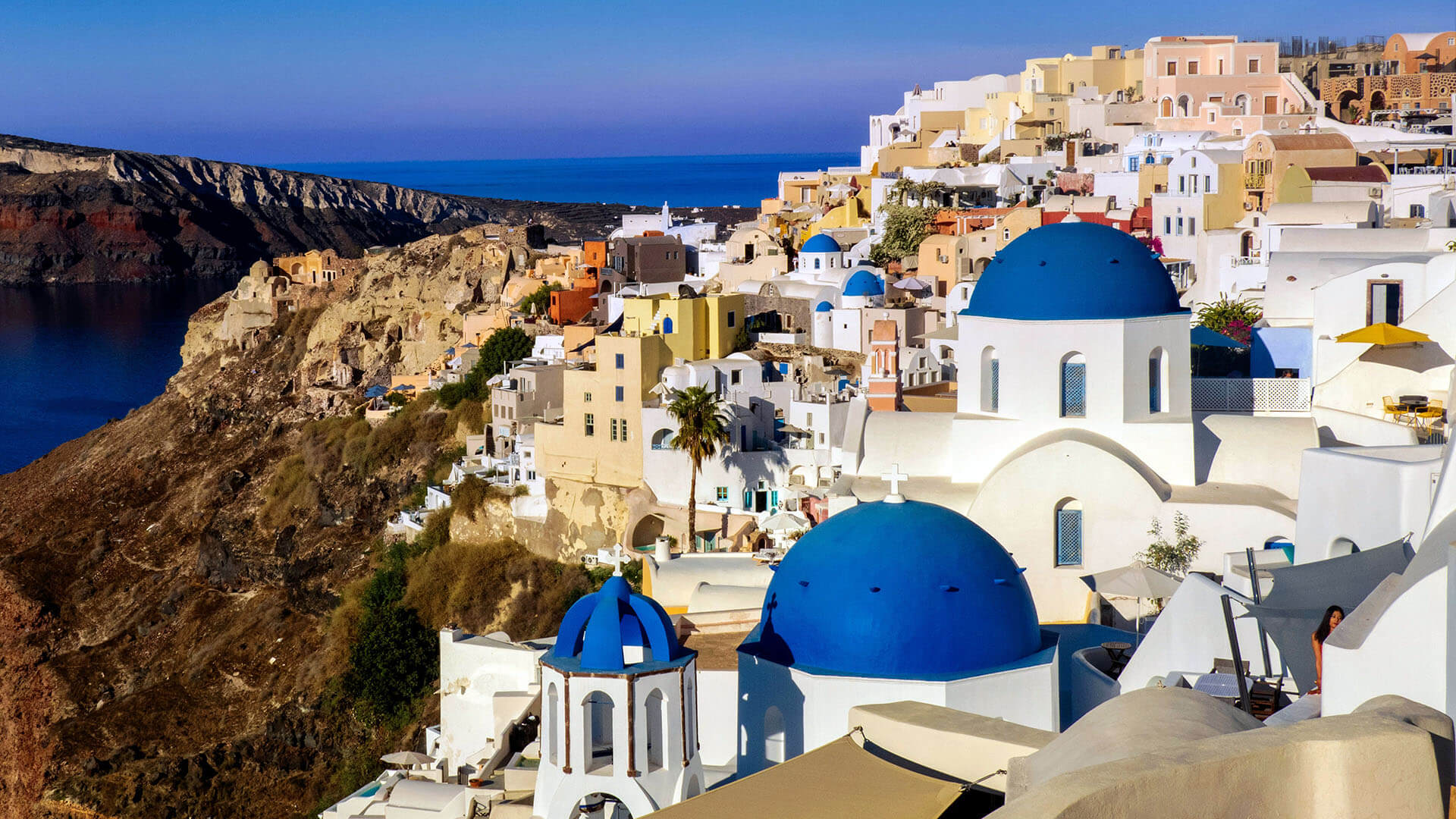
The iconic blue-domed churches of Santorini are among the most photographed landmarks in the world, with the most famous ones located in Oia: Agios Spiridonas (Saint Spyridon) and Anastaseos (Church of the Resurrection), both perched side by side at the edge of the cliffs, offering breathtaking caldera views. Beyond Oia, other remarkable blue-domed churches include St. Gerasimos, known for its vivid color contrasts and panoramic seascapes; Panagia of Agioi Theodoroi in Firostefani, also called the “church with the three bells,” offering one of the island’s most iconic views; and Panagia Theoskepasti in Imerovigli, dedicated to the Virgin Mary and regarded as a symbol of Santorini. Together, these churches form a spiritual and visual journey through the island’s most picturesque and inspiring locations.
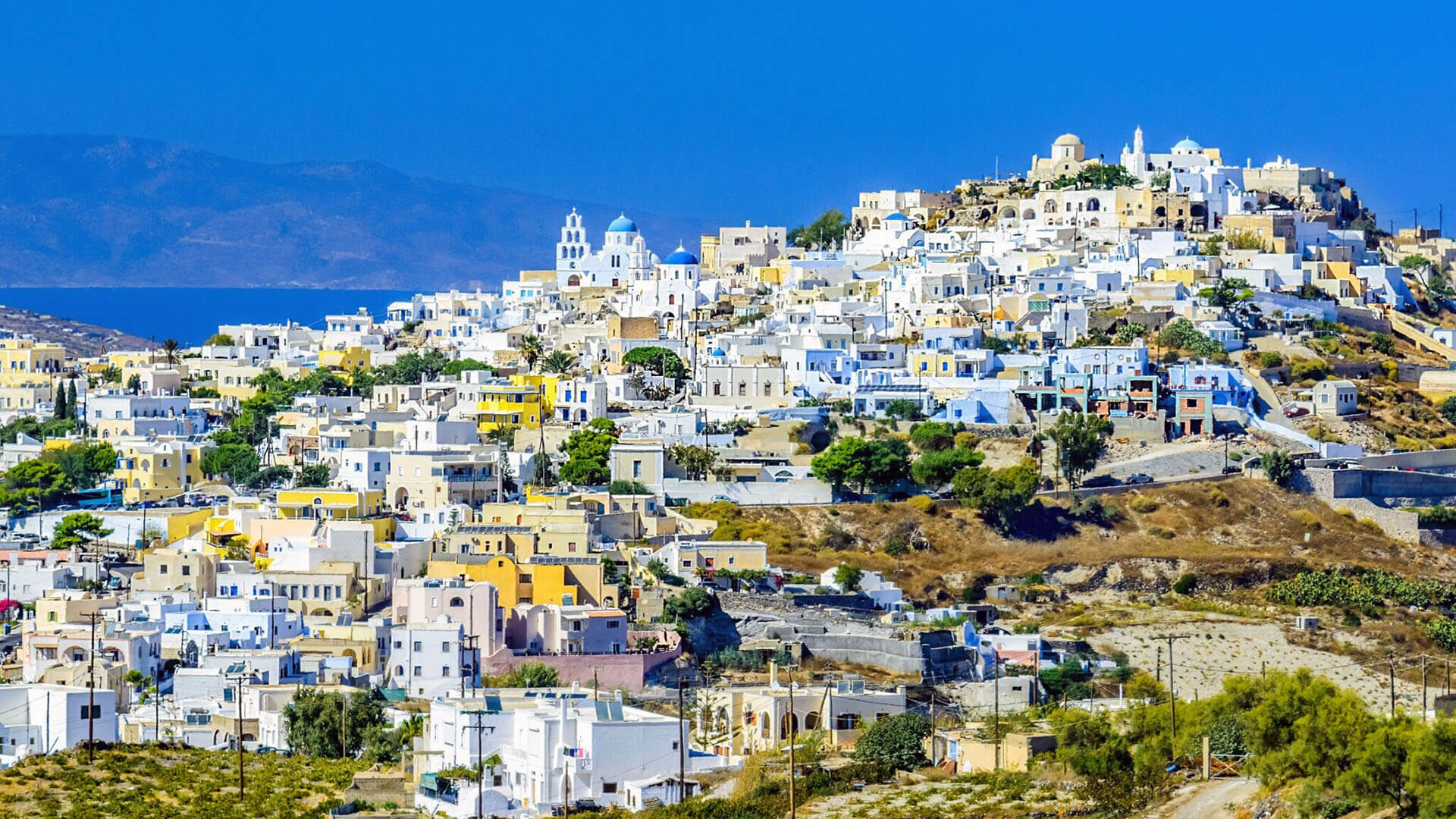
Is a village with a population of 912 according to the 2011 census. Pyrgos is part of the Municipality of Thira and is situated approximately 7 km away from the island's capital Fira. It is built amphitheatrically on a hill that offers magnificent views of Santorini in almost all directions. On top of this hill remain the ruins of a Venetian castle (Kasteli) that was once the island's administrative center. Pyrgos is a typical example of medieval architecture with narrow, labyrinthine streets, fortified walls and hidden passages. Nowadays it is one of the villages of Santorini least spoiled by tourism.
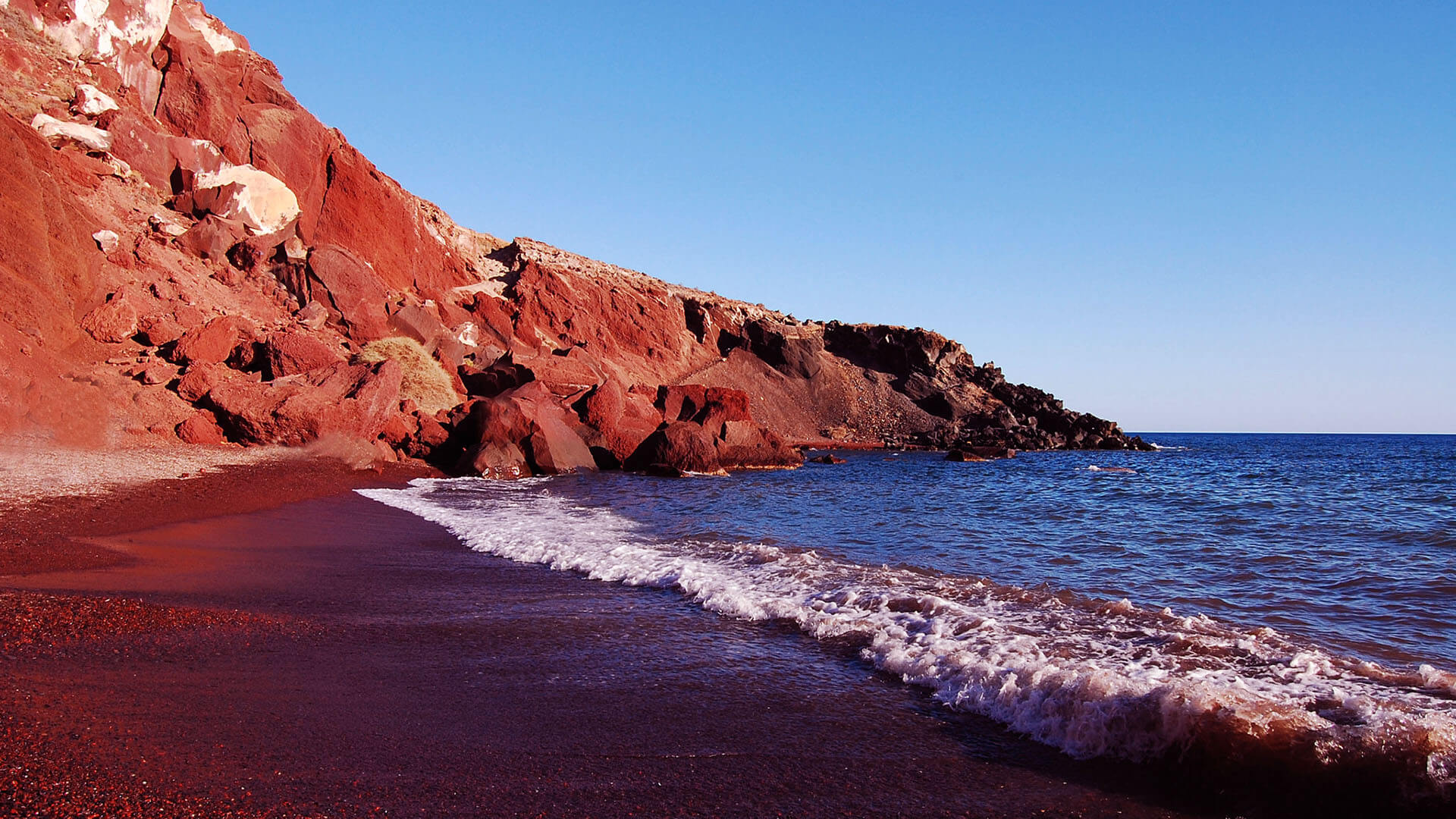
Ιs one of the most scenic and interesting beaches on the island, located near Akrotiri village. The reason for its popularity is its color! Red Beach is without a doubt worth a visit considering that it is a rare sight, probably unique in the whole world, where red is the dominant color. It is enclosed by steep red hills that create a captivating, wild scenery. If you stand on the top you will set eyes on enormous volcanic rocks situated in the sea, small pebbles and sand of various colors, mainly red, all along the beach and appealing dark blue waters. This wonderful palette of contrasting colors will mesmerize you. This is another natural marvel the volcano created.
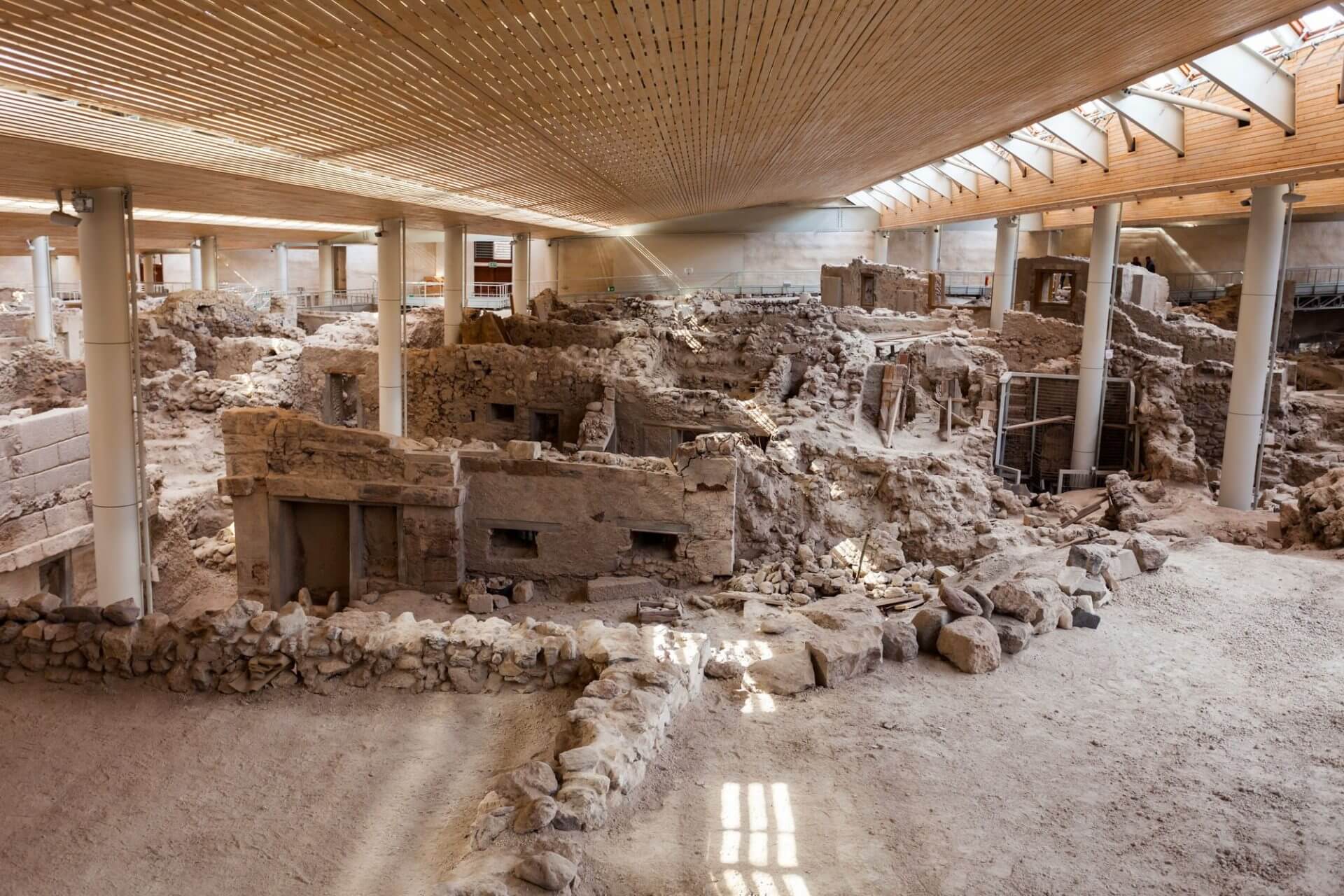
Was buried by the massive Theran eruption during the Late Minoan period; as a result, like the Roman ruins of Pompeii after it, it is remarkably well-preserved. Mural paintings, pottery, furniture, advanced drainage systems and three-story buildings have been discovered at the site.
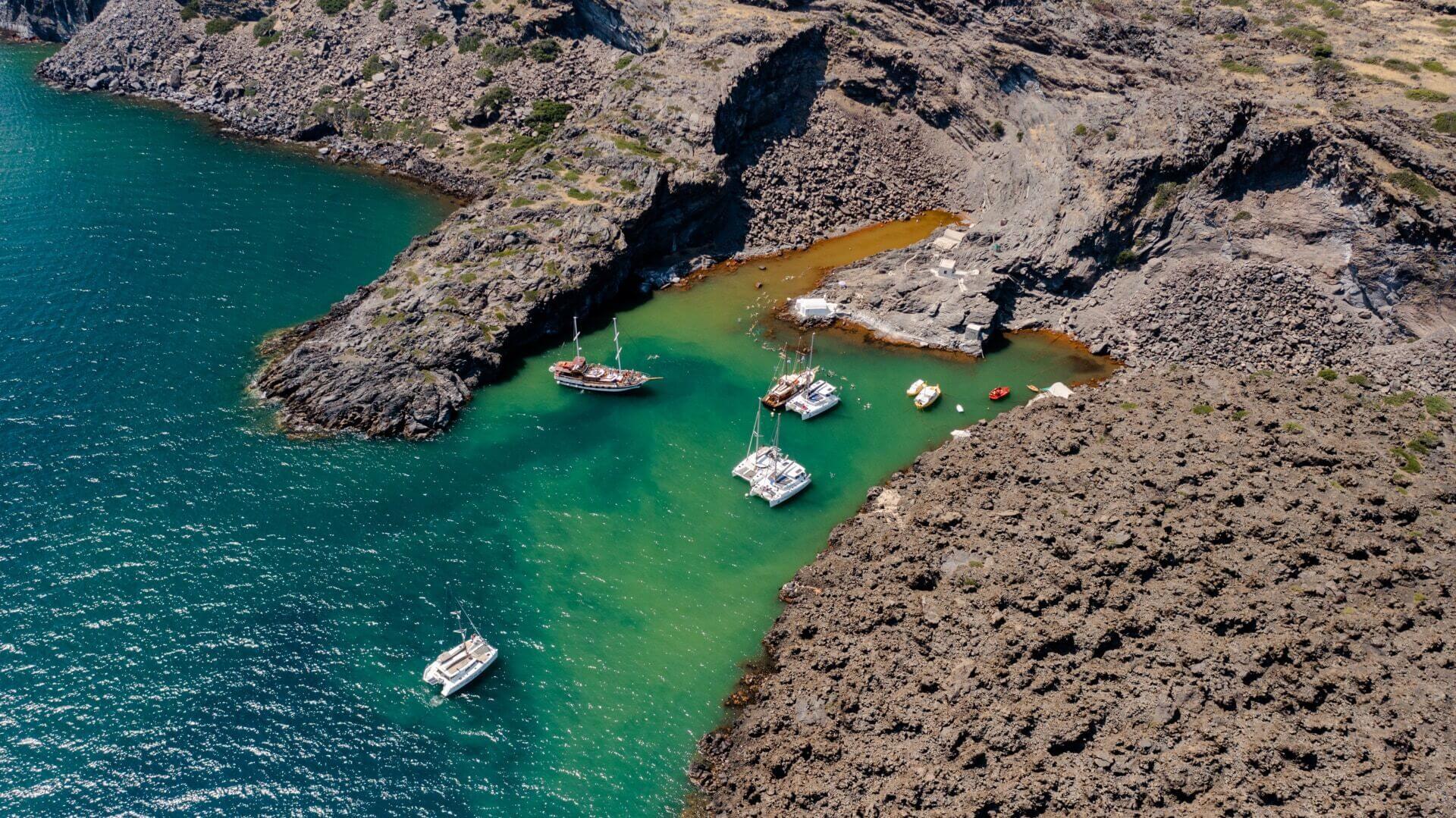
Is just off the coast of Santorini and is included into most caldera excursions. Today, visitors can take a boat trip from the island to Nea Kameni or Palea Kameni, two small islands made of black sand – a clear indicator of volcanic activity – with thermal waters near them. Nea Kameni, however, is the more popular choice. Here, the impact of the volcano can also be felt beneath the surface since the heat from the volcano itself warms the water, creating a thermal bath. The waters near this island are not only warm, but they also have a yellow tint to it, an indicator of the water’s sulfur content. Sulfur is a desirable mineral in thermal springs because it is said to promote healing.
